Beekeeping in Kapsowar
We introduced beekeeping with Langstroth and Top Bar hives, protecting the forest while creating income for households.
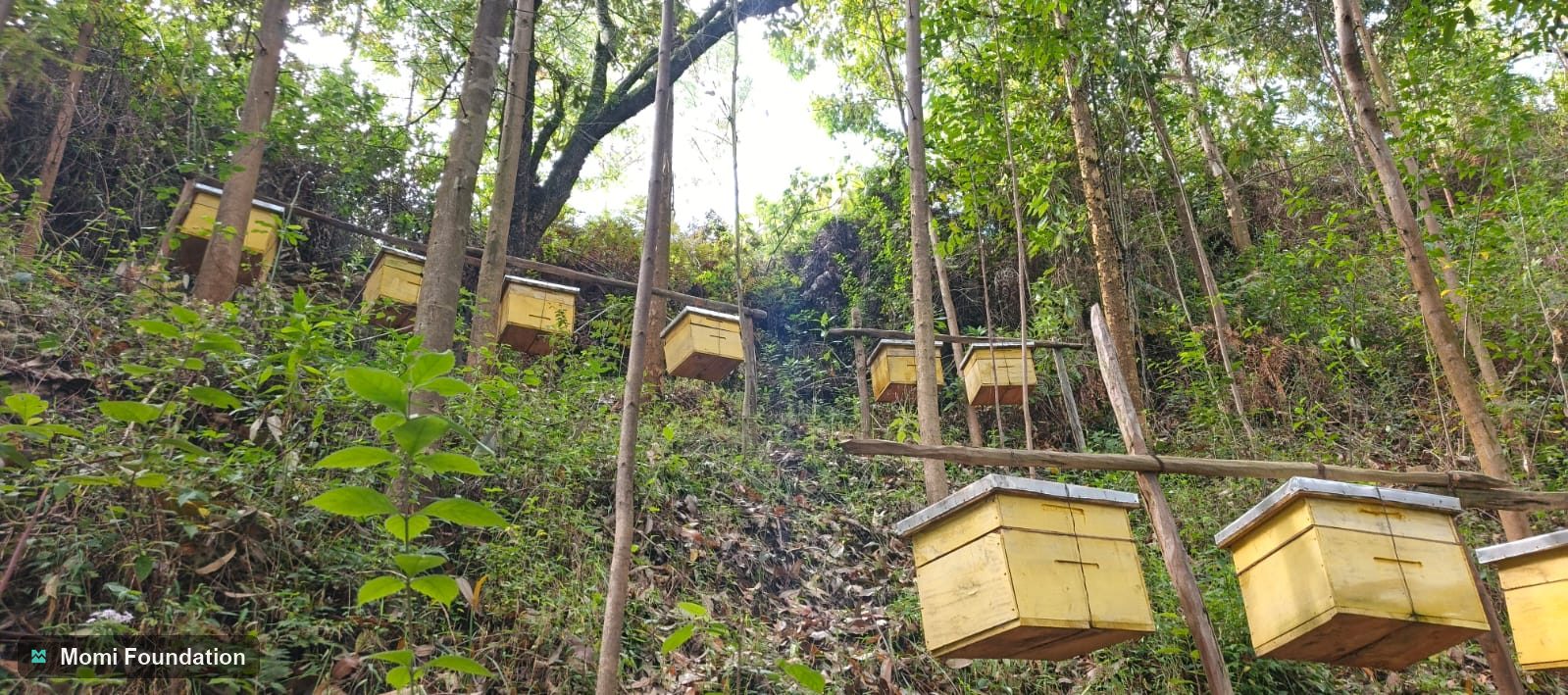
Beekeeping is Momi Foundation's newest pillar: Smart Agriculture. We introduced it with Langstroth and Top Bar hives, a climate-smart venture that protects the forest while creating income for households around Kapsowar.
Why beekeeping, and why here
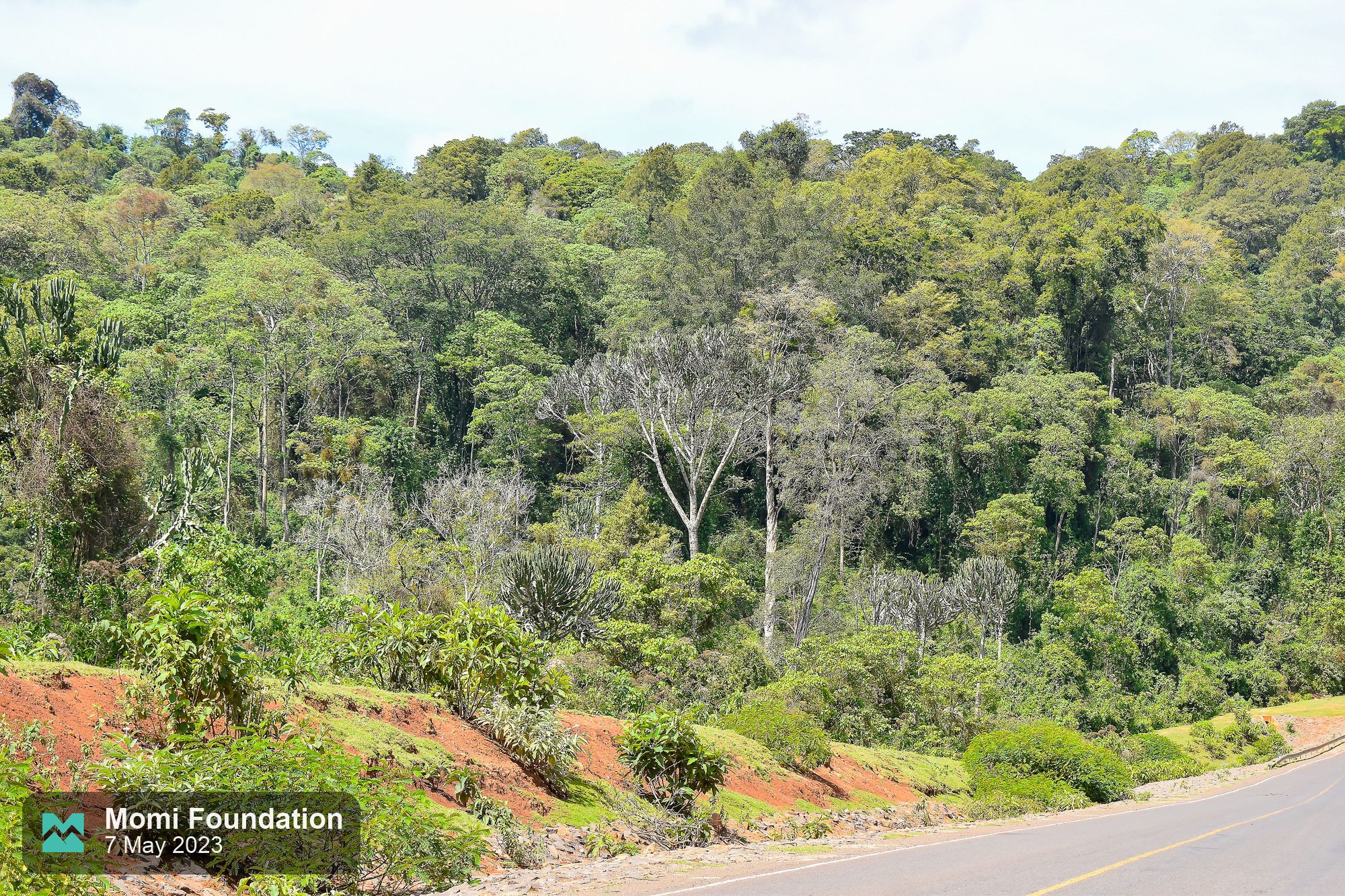
Marakwet's climate is changing, and farmers are adapting. Beekeeping fits that change well: it needs little land, no ploughing and no clearing of trees. In fact, it works best when the forest stays standing, because the bees need the flowering trees and plants around them. That makes every hive a reason to protect the forest, not cut it.
Two kinds of hive
- Langstroth hives are stacked boxes with removable frames. Beekeepers can lift out a single frame to check the colony or harvest honey without destroying the comb, and add boxes as the colony grows.
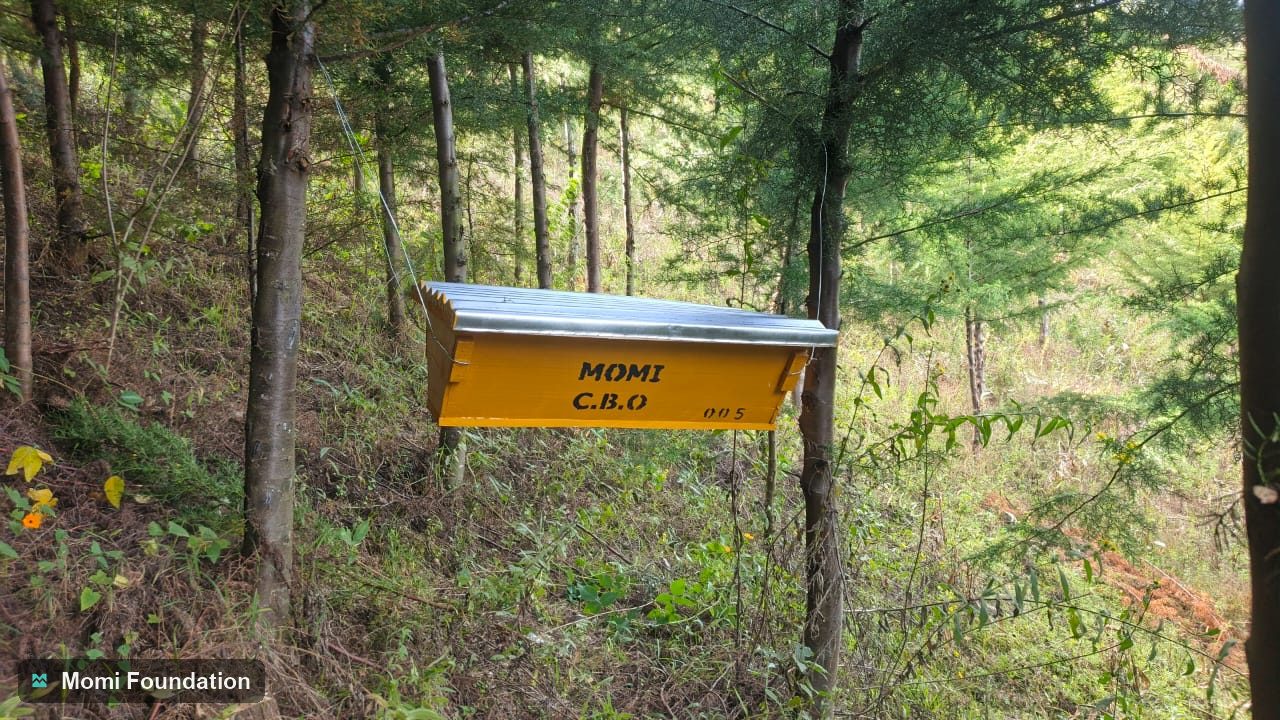
- Top Bar hives are long boxes with wooden bars across the top. The bees build their comb down from each bar. They are simpler and cheaper to build locally, and easy to inspect one bar at a time.
Using both lets us learn which works best in each site and for each household.
What we support
Our Climate-Smart Agriculture programme covers the whole journey: apiary management, hive health, and support along the honey value chain, so that what the bees produce reaches buyers at a fair price. Every hive, site and inspection is recorded in our apiary records, so we can see which hives are thriving and where help is needed.
Where the apiary stands today
Our apiary now manages more than 30 hives. By July 2026, 18 of them were already logged in our register: 12 Langstroth, 4 Kenya Top Bar and 2 traditional, across three sites in Elgeyo-Marakwet: Maina Komolwo in Sambirir ward (14 hives), Katkok in Kapsowar ward (4 hives) and our newest site at Kapmotony Forest. The first three were installed in December 2025. Read the full diary in Our apiary in 2026.
Trees and bees together
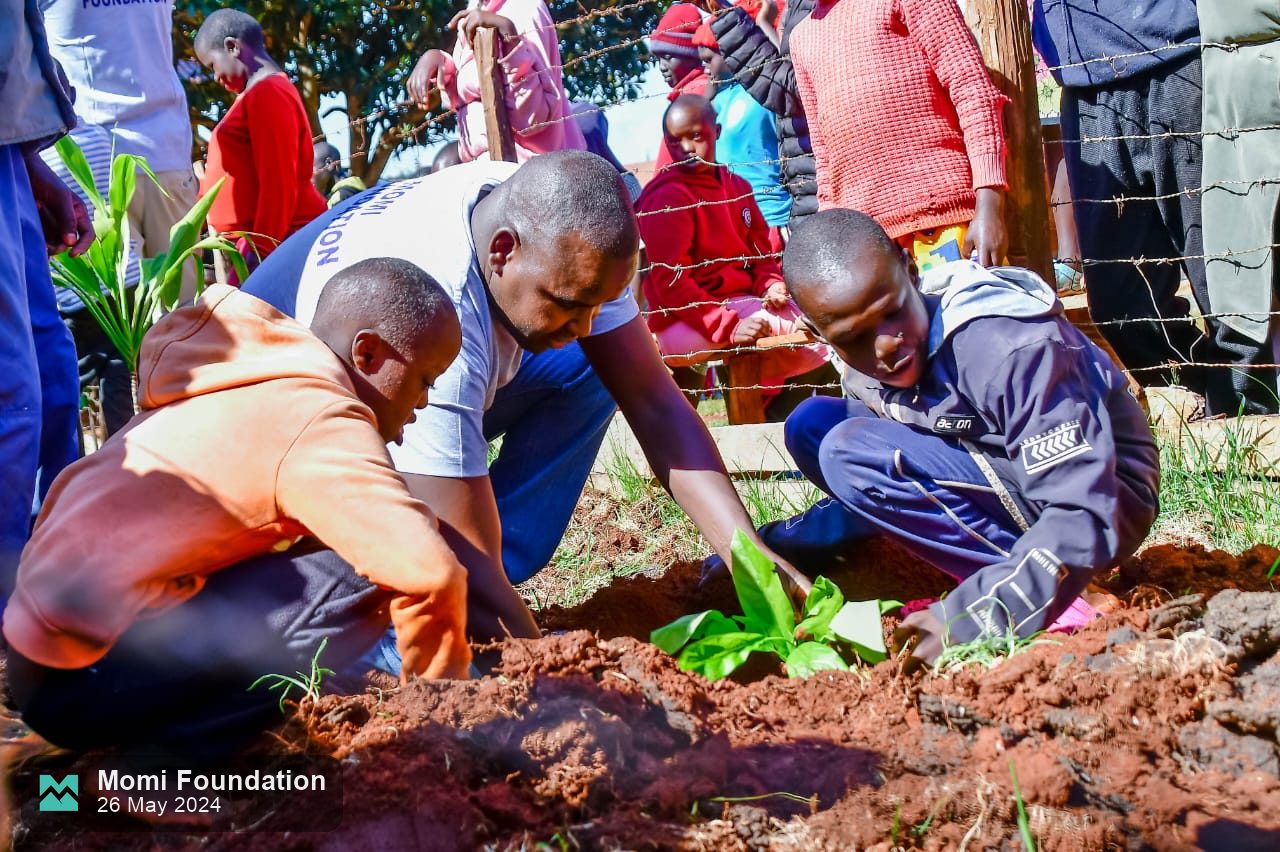
Healthy forests and healthy hives go hand in hand. When we planted trees with pupils at Mindililwo Special School, it was part of the same idea: more trees, more flowers, more food for bees.
Read why bees matter, explore our Climate-Smart Agriculture programme, or support a hive.