Our apiary in 2026: hives, trees and the Kerio Valley
In 2026 beekeeping became part of everyday life at Momi Foundation: more than 30 hives across Elgeyo-Marakwet, hives hung high in the trees, and training for our apiarists.
In 2026, beekeeping stopped being a new idea at Momi Foundation and became part of everyday life. As we put it in July: we are building a story for tomorrow.
Eighteen hives, three sites
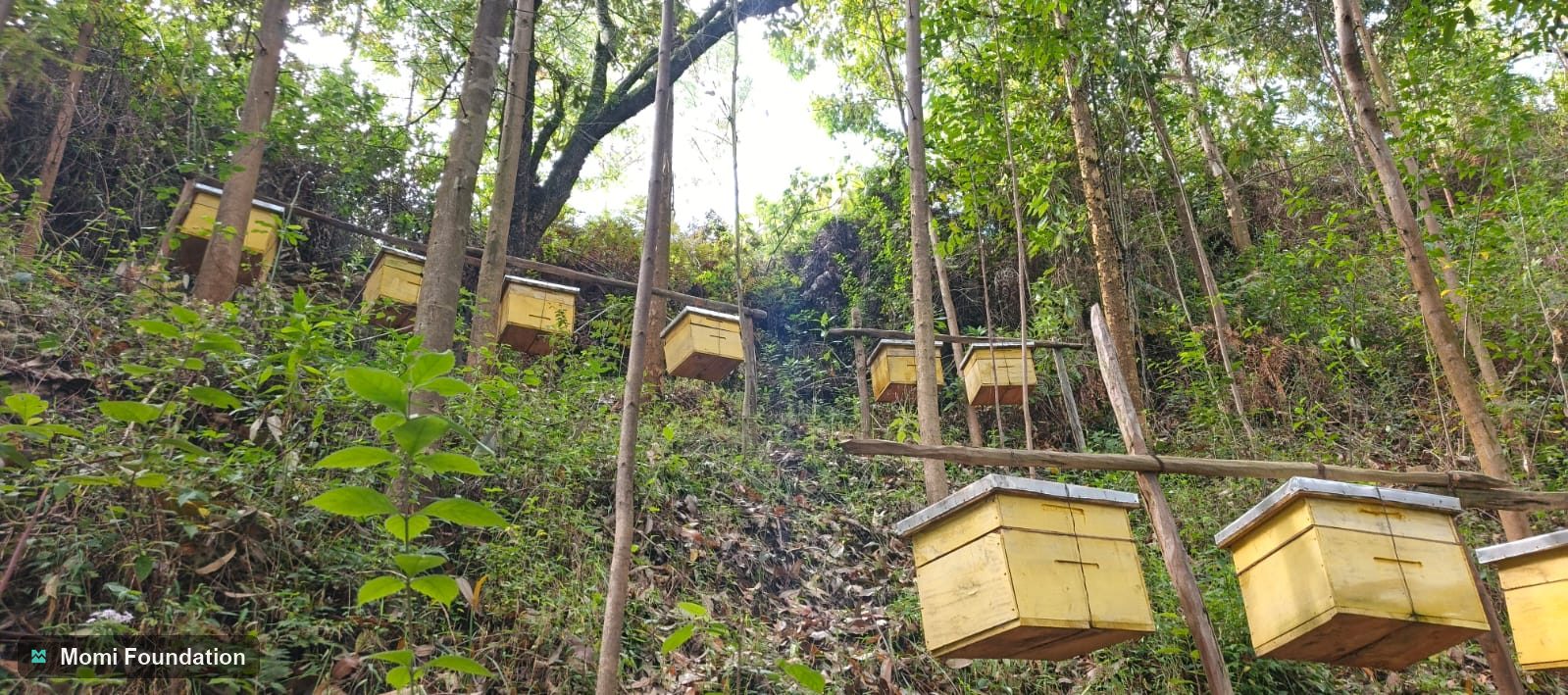
Our first three Langstroth hives went up in December 2025. Through 2026 the apiary grew to more than 30 hives. The first 18 in our register were 12 Langstroth, 4 Kenya Top Bar and 2 traditional hives, across three sites in Elgeyo-Marakwet:
- Maina Komolwo, Sambirir ward, Marakwet East, with 14 hives
- Katkok, Kapsowar ward, with 4 hives
- Kapmotony Forest, Kapsowar ward, our newest site
Every hive and site is recorded in our apiary register, so we know where each one hangs and how its colony is doing.
Up in the trees
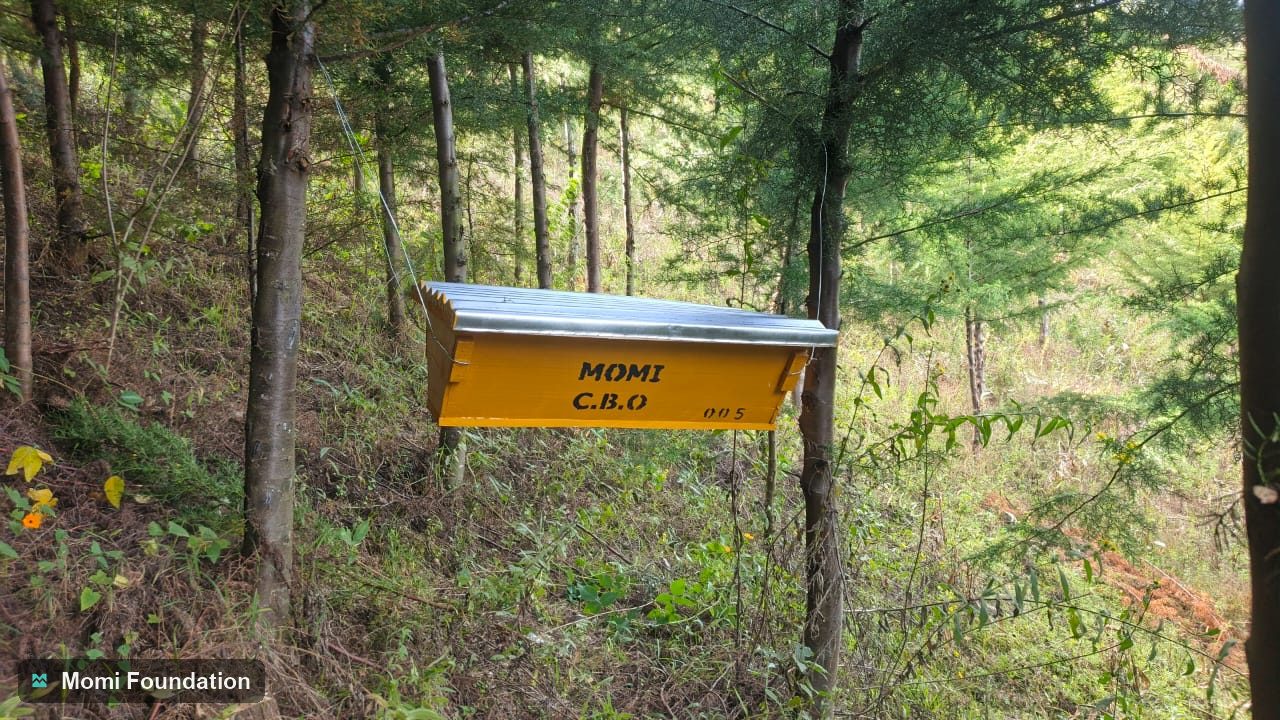
Our hives hang high in the trees, on platforms or from strong branches, above the terraced valleys. Putting them there means climbing, as our photos from May and July show. In May we called it "kicking big things, apiculture all the way", and in July we shared photos of hive MOMI C.B.O 013 being hung and secured high in a tree.
Training our apiarists
On 28 May 2026, with support from a partner, we held an apiary management training at Chesongoch Center for apiarists among our members, so the people who look after the hives have the skills to keep colonies strong.
Why it matters for the Kerio Valley
Honeybees pollinate indigenous plants, which helps preserve wild flora and stabilise fragile environments like the Kerio Valley. That pollination raises the yields of nearby farms, and honey and wax give families a sustainable, drought-resistant income. Because good honey needs healthy forest, every hive is a reason to say no to deforestation and charcoal burning.
In October we summed it up: buzzing for biodiversity, protecting our ecosystem from the roots up. Read why bees matter, follow the apiary on Facebook, or support a hive.